A Food Lover’s Guide to the Great Market Hall
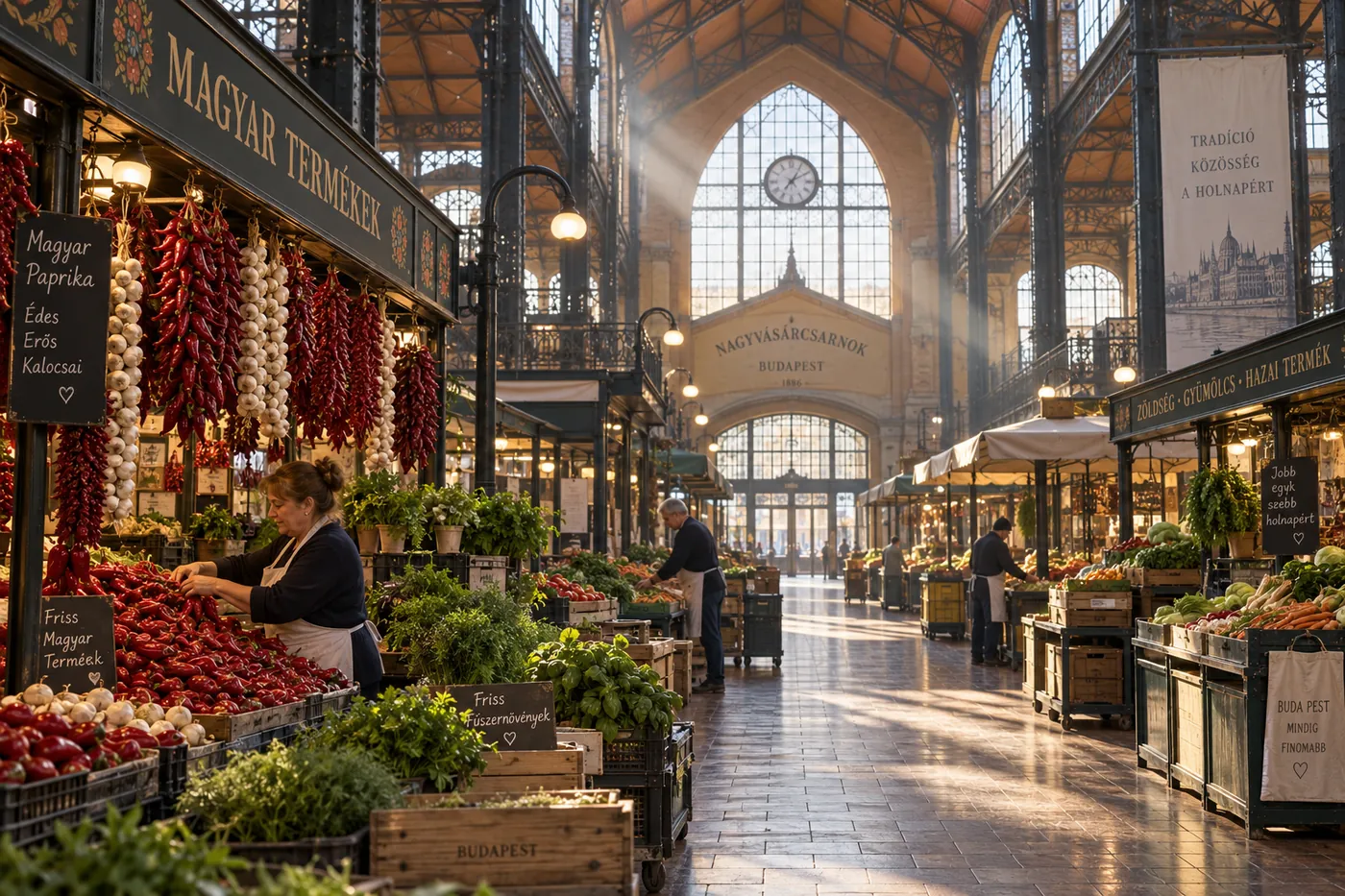
Arrive at seven and the Great Market Hall Budapest still belongs to the people who work in it. Delivery trolleys rattle over the tiles, a butcher sharpens a knife with that unhurried scraping rhythm, and somewhere in the middle aisle a woman is stacking bunches of parsley into a wall of green. The air smells of cold meat, damp cardboard and — unmistakably — paprika. By eleven the same hall will be a slow-moving river of visitors photographing salami. Both versions are worth seeing. Only one lets you actually shop.
The building deserves a minute of your attention
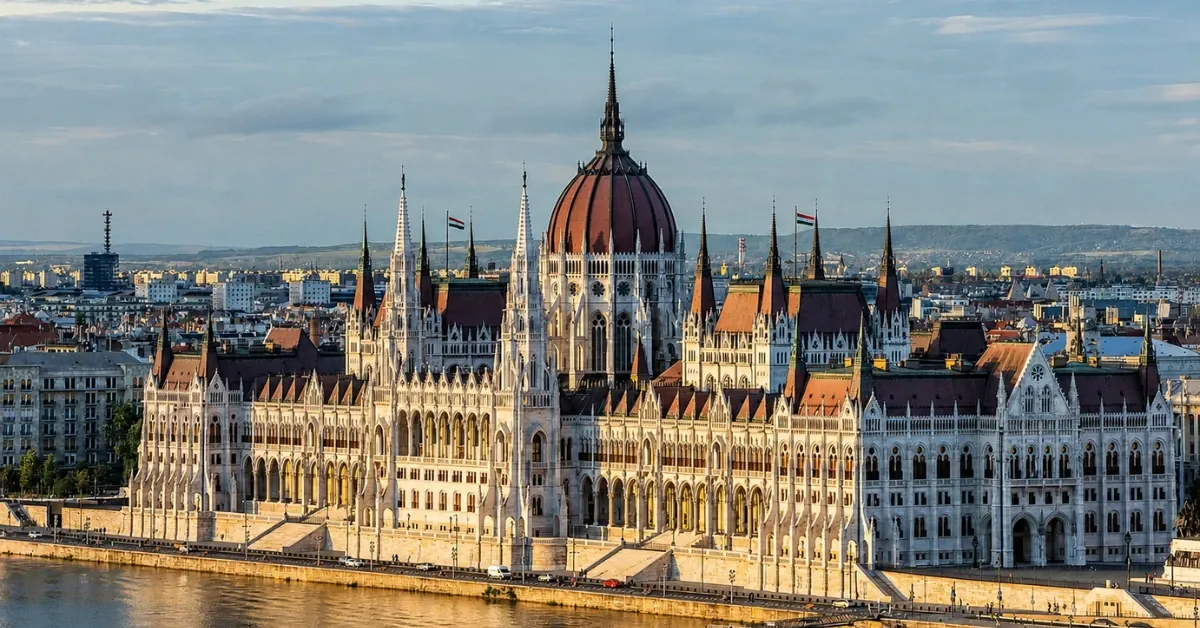
Before you look at the food, look up. The hall opened in 1897, designed by Samu Pecz, and it was a piece of civic swagger: iron trusses spanning a nave like a cathedral's, brick walls, and a roof laid with glazed Zsolnay tiles in green, ochre and rust. It was one of five covered markets built to drag Budapest's food supply out of the mud of open-air trading. Bombing and decades of neglect nearly finished it; a full restoration in the early 1990s brought back the tiles and the light. Stand at the Fővám tér entrance, where Váci utca ends and Liberty Bridge begins, and the whole thing reads as one confident gesture.
Ground floor: paprika, pork and the good pickles
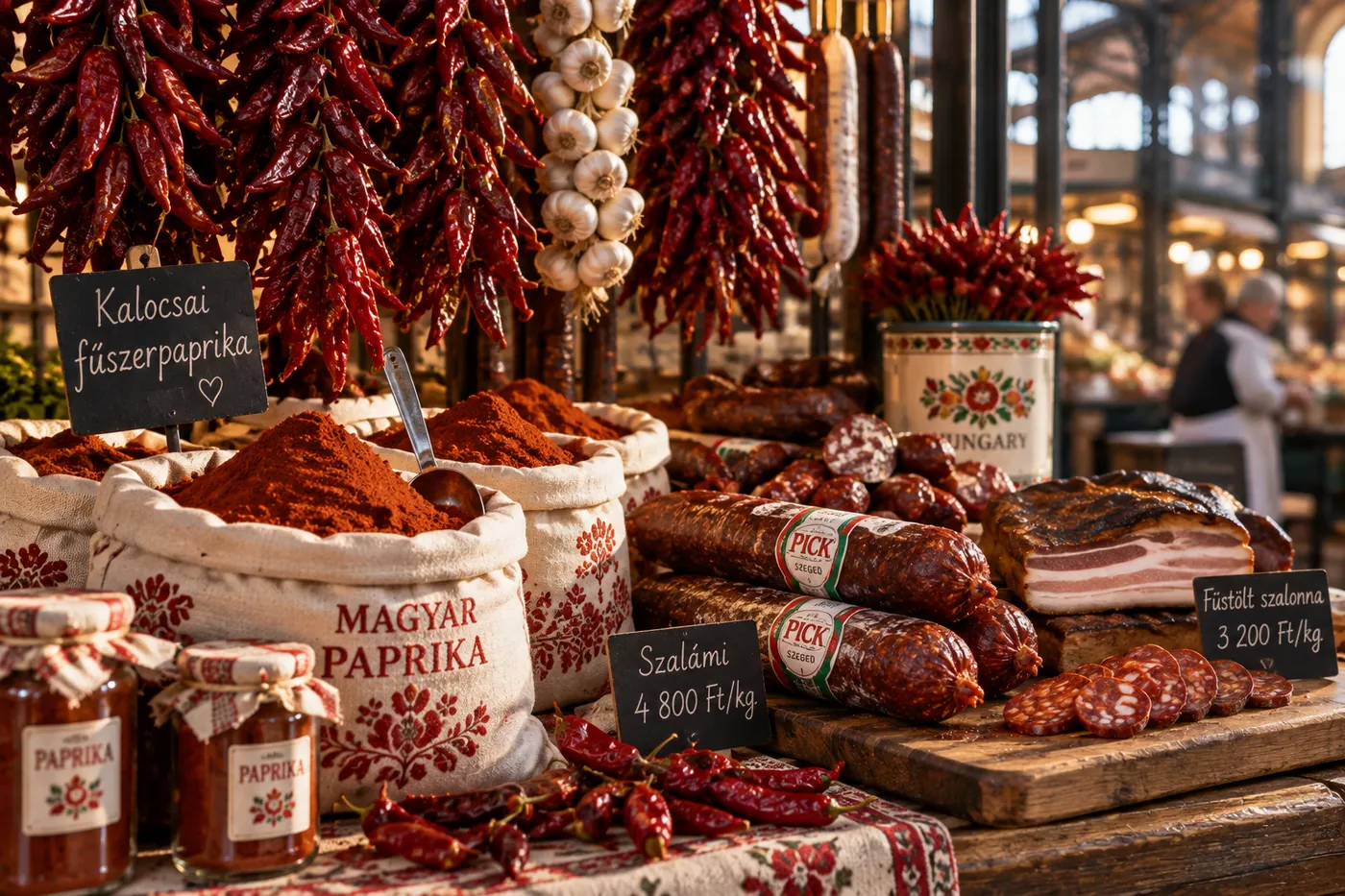
The main level is the heart of it. Produce first — depending on the month you'll find white asparagus, sour cherries, elderflower, kohlrabi the size of a fist, and in late summer the pointed sweet peppers and tomatoes that go into lecsó, Hungary's stewed-pepper answer to ratatouille.
Then the meat counters, which are where Hungarian cuisine makes its argument. Look for mangalica, the curly-haired heritage pig whose fat is soft, nutty and unapologetic; ask for a few slices of the cured loin. Salami runs from the industrial-reliable Pick winter salami to csabai and gyulai sausages spiked with paprika and garlic. Smoked bacon (szalonna) comes in slabs. If a vendor offers you a taste on the point of a knife, take it — that's not a sales trick, it's the standard etiquette.
Afew things worth buying properly rather than as an afterthought:
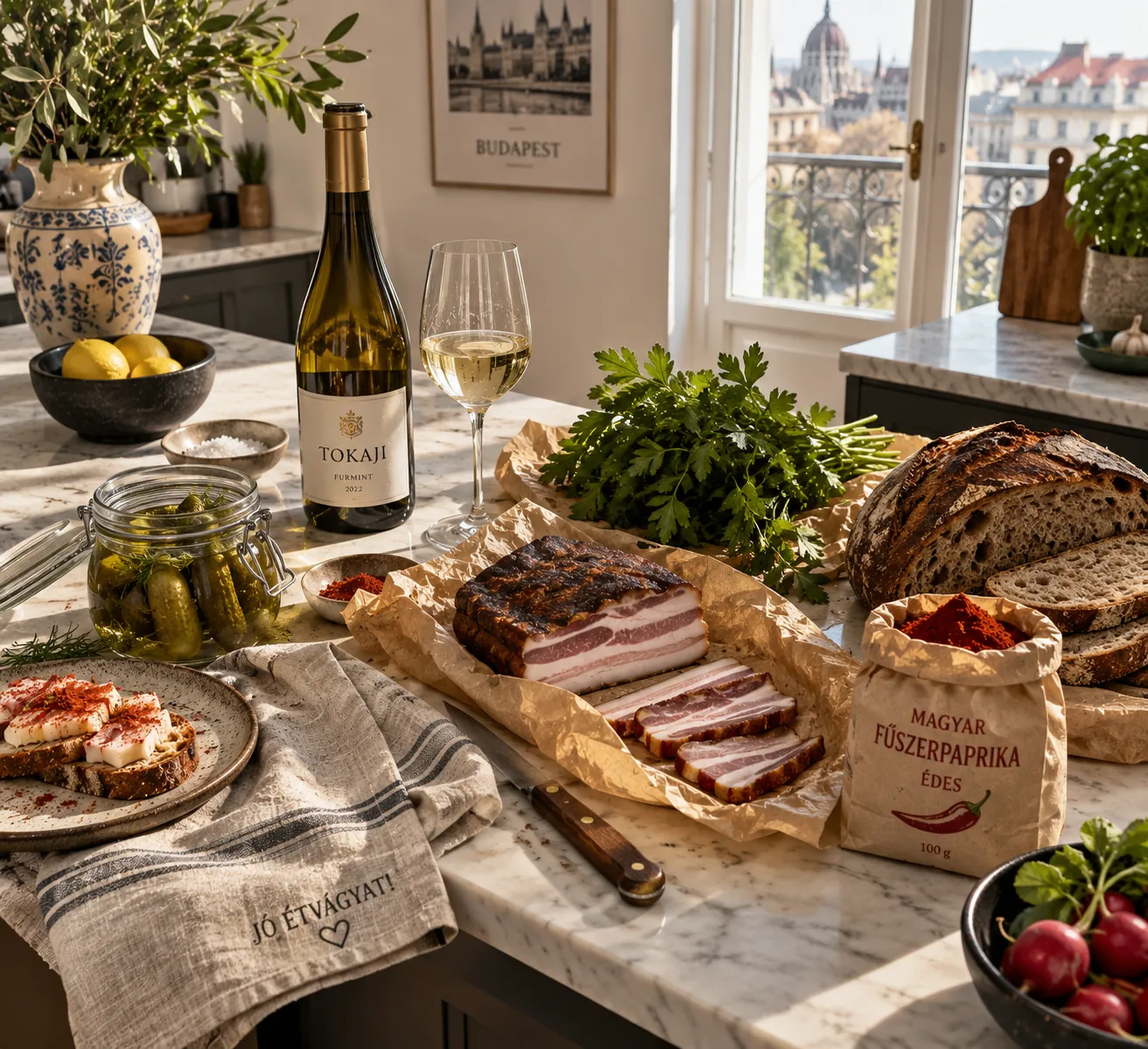
- Paprika, loose or in a cloth bag, not the tourist tin. Learn two words: édesnemes (sweet noble, the everyday workhorse) and csípős (hot). A good one is brick-red and fragrant, not brown and dusty.
- Paprika paste in a tube — Erős Pista or Piros Arany. It costs almost nothing, survives a suitcase, and improves everything you cook for the next year.
- Kovászos uborka, the summer-only sour-brined cucumbers fermented in sun-warmed jars with dill and rye bread. Sold from vats. Deeply unglamorous, completely addictive.
- Acacia honey and a bottle of Tokaji from the wine stalls, where a five-puttonyos dessert wine sits happily next to the dry furmint almost nobody outside Hungary knows about yet.
Prices drop the further you walk from the front doors. That's a rule with very few exceptions.
Downstairs, then upstairs
The basement is the under-visited floor and the most interesting one: fishmongers with live carp in tanks (the traditional Christmas Eve fish), a Turkish grocer, pickle vats, and butchers doing the volume trade. It smells of brine and ice water. Go down even if you buy nothing.
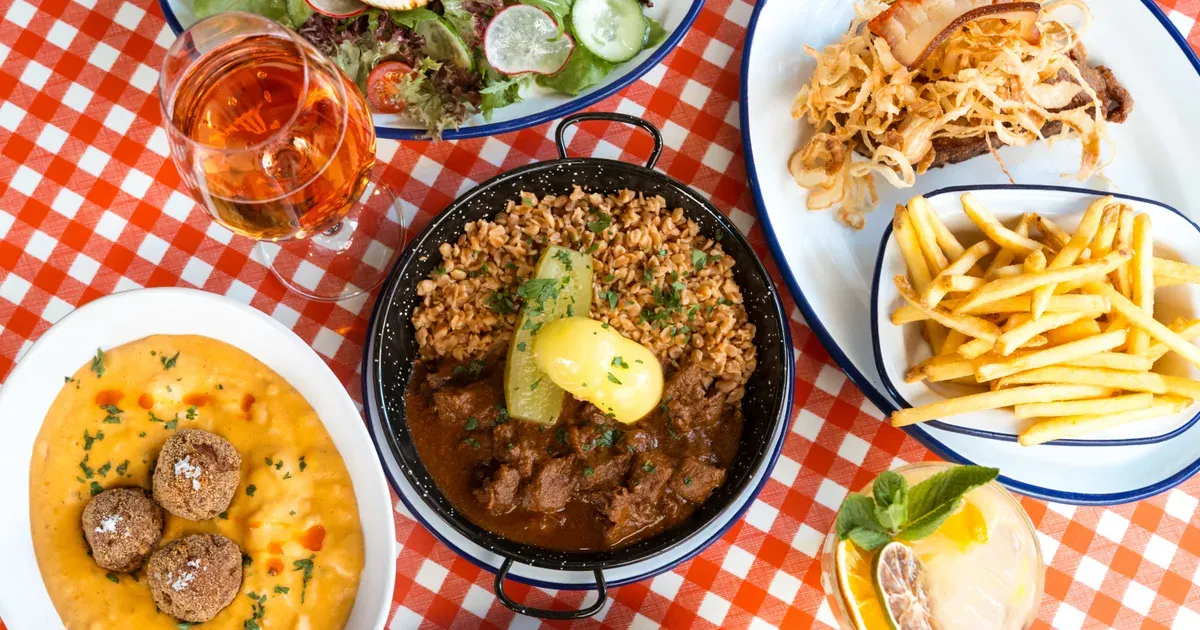
The upper gallery is the part that divides people. Yes, it's touristy, and yes, half of it sells machine-embroidered tablecloths from somewhere that isn't Hungary. But the food stands up there are genuinely fun if you calibrate your expectations: a lángos — fried dough the size of a dinner plate, brushed with garlic water, heaped with sour cream and grated cheese — eaten leaning on the railing above the crowd is a fine Budapest lunch. The self-service Hungarian canteen up there does honest goulash and stuffed cabbage at canteen prices. Skip the sit-down places with laminated photo menus.
Good to KnowThe hall is closed on Sundays, shuts at 3pm on Saturdays (with half the ground-floor stalls packing up by 1pm), and closes early Mondays. Best window: Tuesday to Friday before 10am. Bring cash — plenty of the smaller producers still don't take cards. If you land in Budapest on a Sunday, the Szimpla Kert farmers' market in District VII fills the gap from 9am.