Learning Goulash: Budapest's Best Cooking Classes
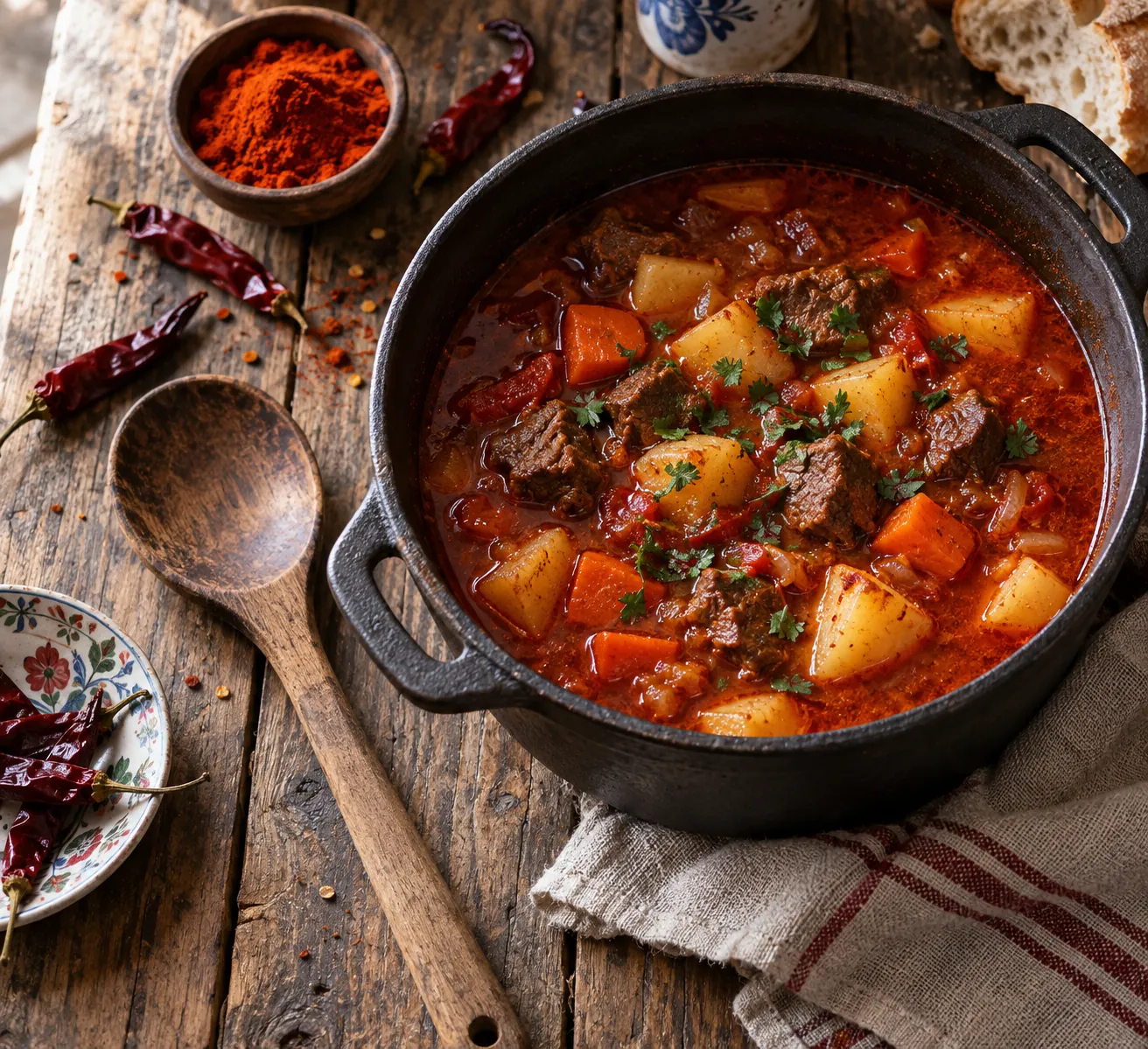
The first thing a Hungarian cooking teacher will tell you is that you have almost certainly never eaten goulash. What you ate — thick, brown, flour-bound, possibly with a spoonful of sour cream melting on top — was something else, invented abroad and named optimistically. Real gulyás is a soup. It is clear-ish, deep red-orange, loose enough to drink from the spoon, and it tastes overwhelmingly of two things: onion and paprika.
That correction is worth the price of a class on its own. Everything after it is technique.
Gulyás, pörkölt, paprikás: the family tree
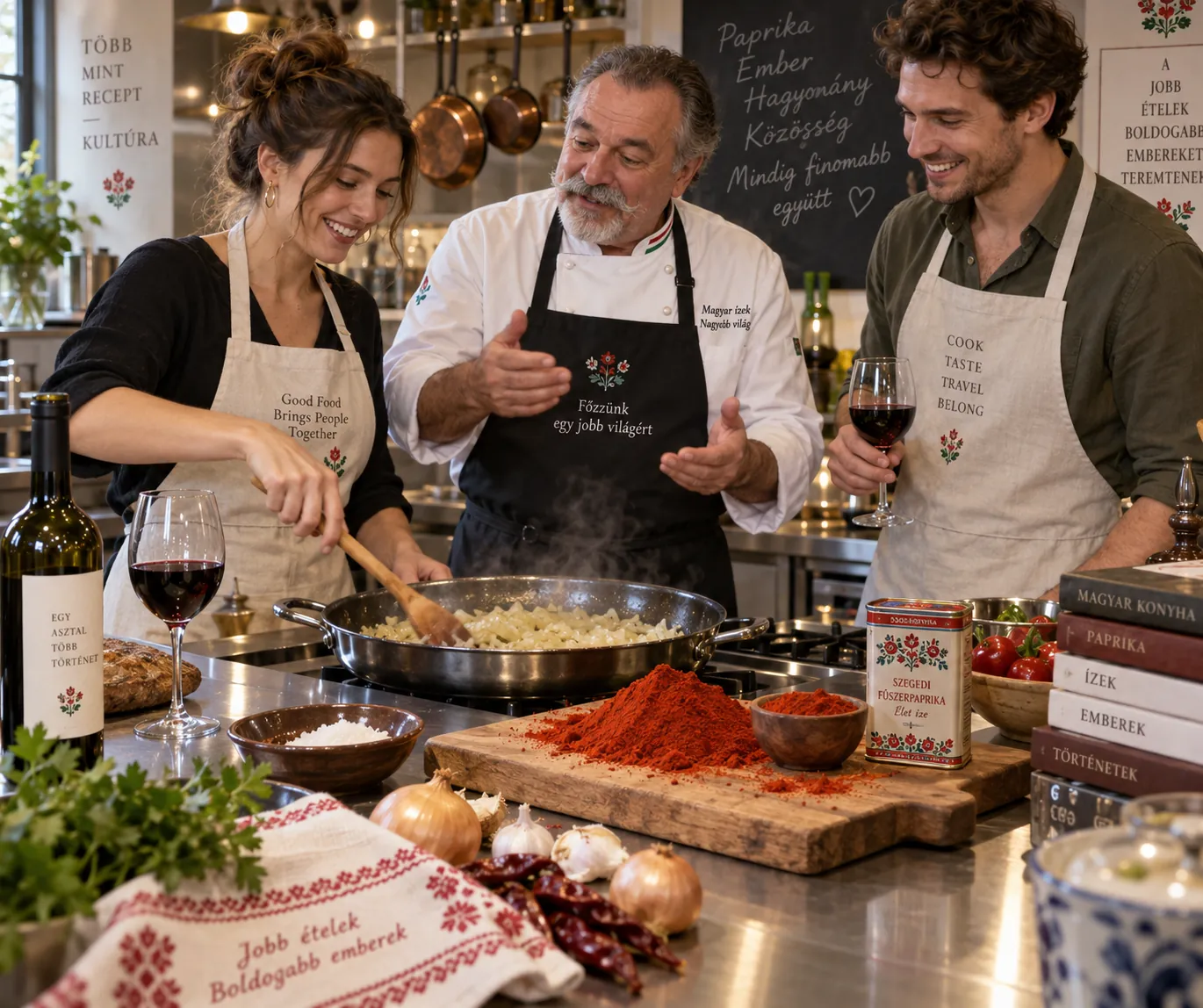
Hungarian cooking runs on one base — onions sweated slowly in fat until they collapse, then paprika stirred in off the heat. What you add next decides the dish's name.
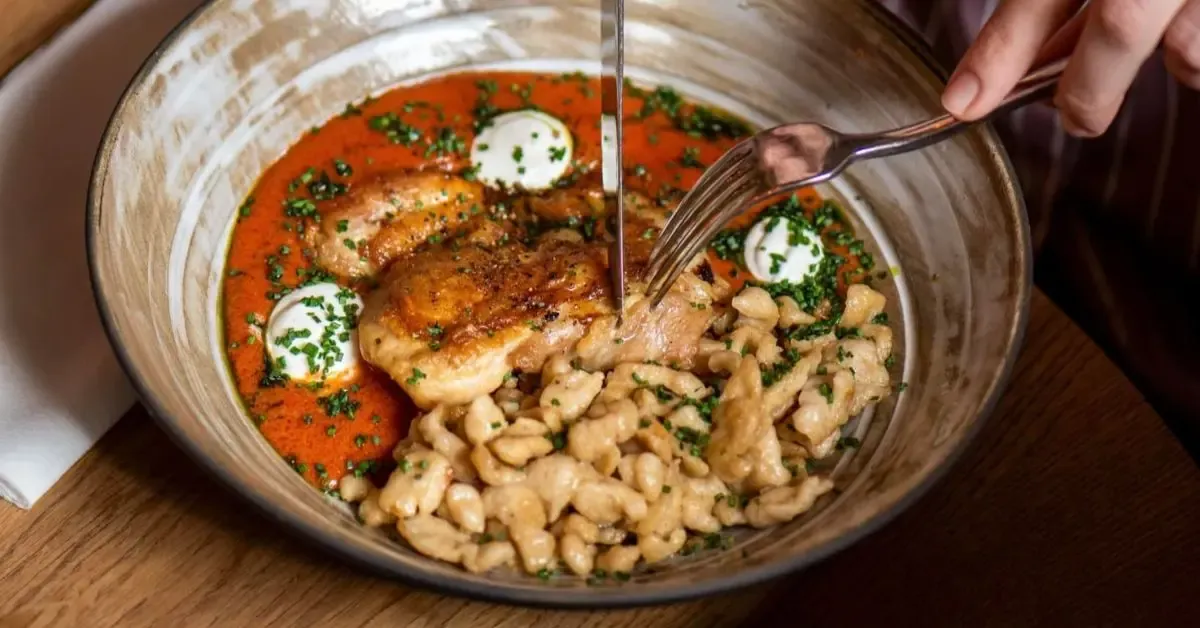
Add a lot of water, cubed beef shin, potatoes, carrots, and pinched csipetke dumplings, and you have gulyás, the herdsman's soup that gave the world its mangled loanword. Keep the liquid low so the meat braises in its own juices and you have pörkölt, the stew most foreigners actually mean when they say goulash. Finish a pörkölt with sour cream and you're in paprikás territory — chicken paprikás with nokedli dumplings, the Sunday lunch of half the country.
Once you can see the three as variations on a single move, Hungarian menus stop being a guessing game.
What a good Budapest cooking class actually teaches
The genuinely useful classes spend real time on the things a recipe card can't convey. Watch for these:
The onion-to-meat ratio. Roughly equal by weight. Newcomers always under-onion, and the soup comes out thin and one-note.
Fat matters. Lard, not olive oil. It carries the paprika's colour and flavour in a way neutral oils don't.
Paprika goes in off the heat. Above about 140°C, ground paprika scorches in seconds and turns irreversibly bitter. Pull the pot off the flame, stir the paprika into the soft onions, then add liquid. This single habit separates good goulash from sad goulash.
No flour, ever, in gulyás. The body comes from onion and long, gentle cooking.
Caraway, and not much else. A pinch of crushed caraway seed, garlic, a tomato, a pale TV paprika pepper. Hungarian home cooking is not a spice-cabinet cuisine.
Where to book
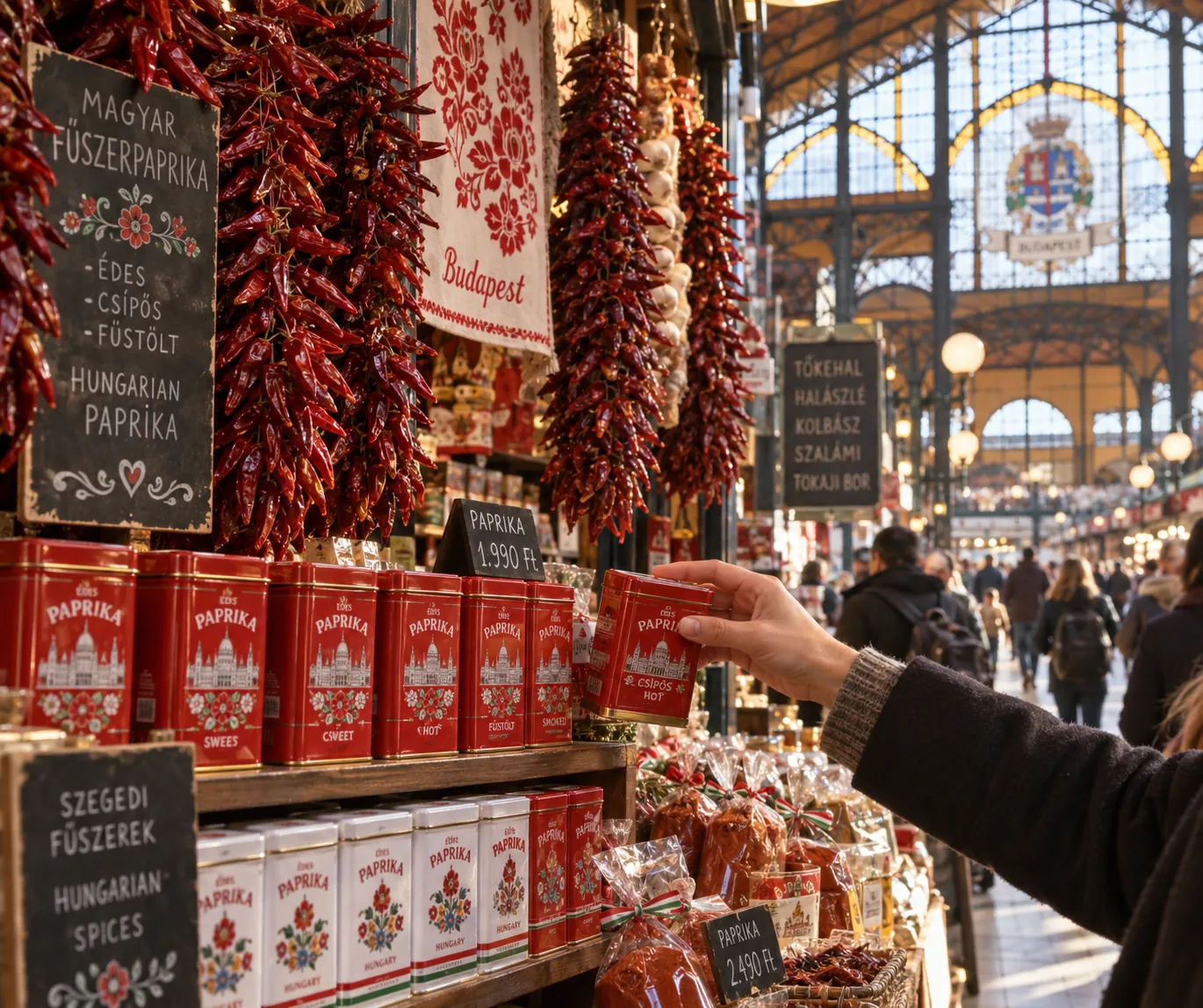
You can book a Budapest market tour and Hungarian cooking experience through GetYourGuide. These experiences typically begin at the Great Market Hall, where you explore the stalls with a local guide or chef and discover essential Hungarian ingredients such as paprika, peppers and local produce. Afterwards, you head to the kitchen for a hands-on cooking class, preparing traditional Hungarian dishes and enjoying the meal together.
.Taste Hungary, better known for wine, teaches from the other direction: smaller classes, more context, and pairings that explain why a Villány cabernet franc stands up to pörkölt while a Tokaji dry furmint does something clever with paprikás chicken. Good if you want conversation as much as cooking.
Beyond those two, a handful of chefs run classes out of their own flats — search for private Hungarian cooking classes and read recent reviews. These tend to cost more per head but deliver the grandmother-in-the-kitchen version: one pot, one long story, endless tasting.
Expect roughly 25,000–40,000 HUF per person for a three-to-four-hour class with a market tour and a full meal, wine usually included. Book at least a couple of days ahead; many classes need a minimum of two or four participants to run.
Good to KnowMost market-tour cooking classes start at the Great Market Hall, which is closed all day Sunday and shuts at 3pm on Saturday. If your only free day is Sunday, book a class that sources ingredients in advance — or shift the market visit to Saturday morning, when it's busiest but fully stocked.
Bringing it home
The souvenir worth carrying is paprika. Buy édesnemes (noble sweet) as your workhorse and a small bag of csípős hot for heat. Sealed tins or vacuum packs keep far better than the decorative cloth sacks — ground paprika fades within months once air gets at it, and a faded tin makes grey goulash. Szeged and Kalocsa are the two growing regions; either is fine, and the difference is smaller than vendors suggest.
The better move, honestly, is to cook it once more before you fly home, while the technique is still in your hands. Anyone staying somewhere with a proper kitchen — the suites at ZOYA Luxury Residence have full ones, and the Great Market Hall is a short walk across the Inner City — can turn a Saturday market haul into dinner that evening. A pot of gulyás improves overnight anyway. Make it Saturday, eat it Sunday, and you'll understand the dish better than any restaurant could explain it.