Thing to Do · 6 July 2026
What to Eat in Budapest: 15 Traditional Hungarian Dishes
If you’re planning a trip to Hungary’s capital, one thing is certain: you’re about to eat very, very well. Traditional Hungarian food is hearty, deeply flavorful, and built around paprika, slow-cooked meats, and fresh-baked pastries that have barely changed in a hundred years. Whether you’re wondering what to eat in Budapest or trying to figure out if goulash is actually a soup (spoiler: yes), this guide covers the essential dishes, where locals actually eat them, and a few tips to help you order like you’ve been here before.
A Quick Introduction to Hungarian Cuisine
Hungarian cuisine sits at a crossroads of Central European, Balkan, and Ottoman influences, but its defining ingredient is unmistakably local: paprika. Hungary grows and grinds some of the best paprika in the world, and it shows up in almost every savory dish on this list. Beyond that, expect rich stews, fresh river fish, hand-stretched pasta, and a serious pastry tradition inherited from the Austro-Hungarian Empire.1. Goulash Soup (Gulyás)
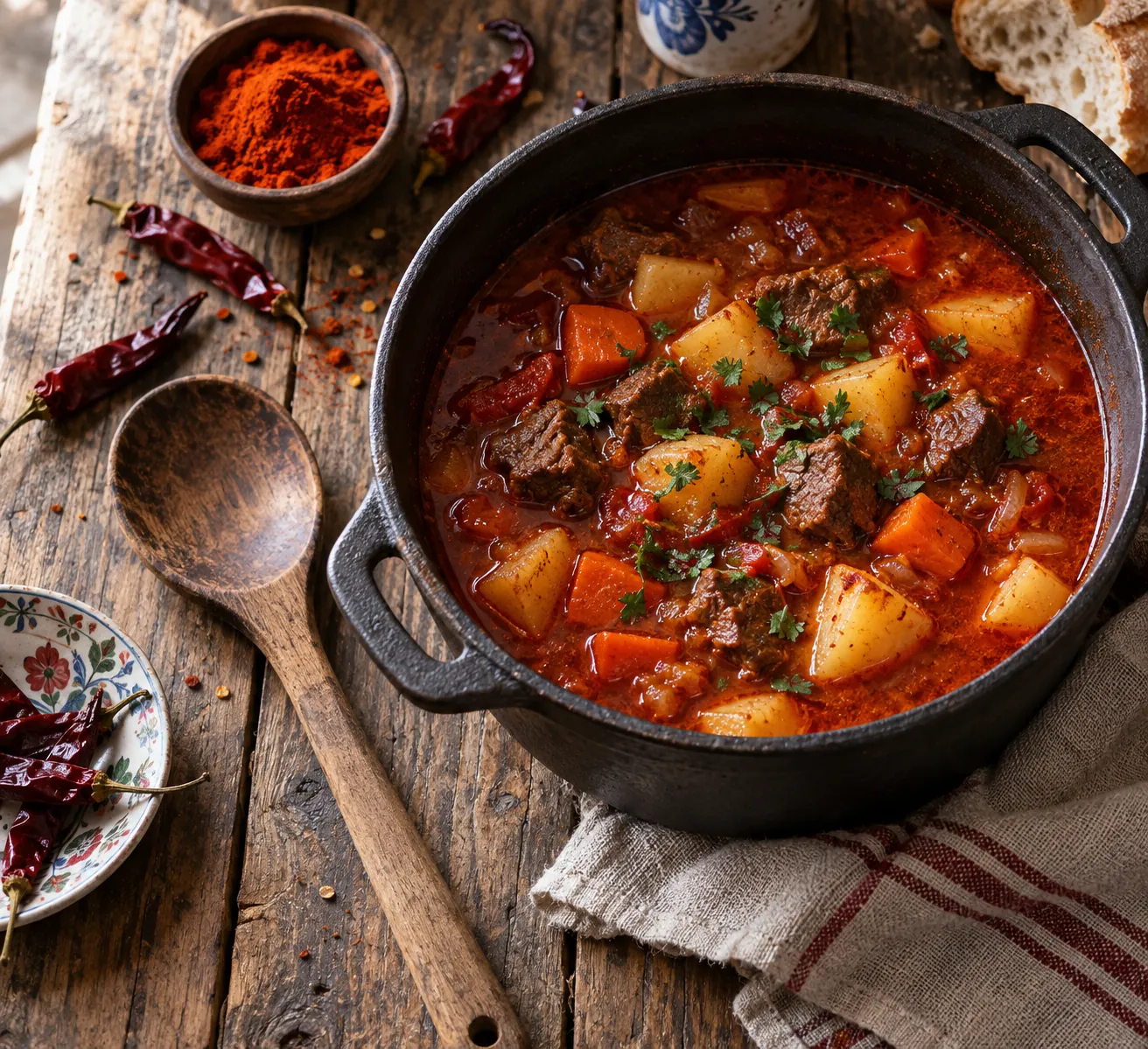
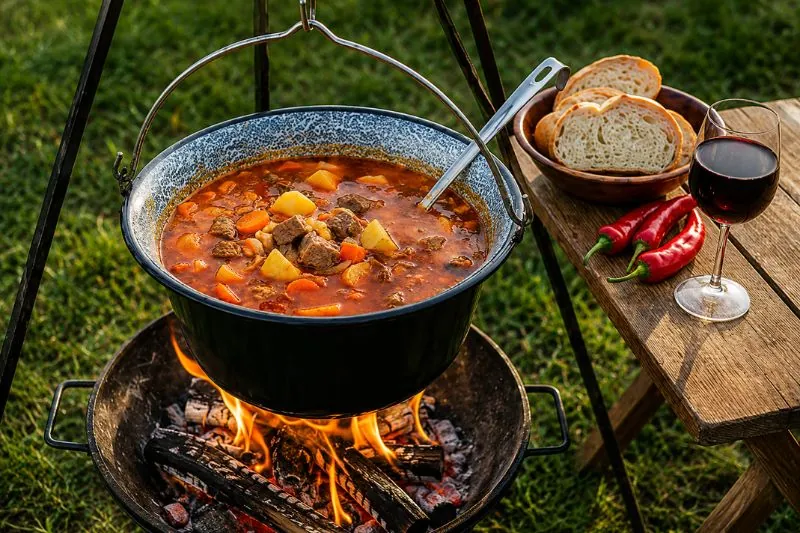
What is goulash? Contrary to what many visitors expect, authentic Hungarian goulash is a soup, not a thick stew — that thicker version (pörkölt) is a different dish entirely. Real gulyás is made with beef, potatoes, onions, and a generous hand with paprika, simmered until the broth turns a deep, rusty red.
Where to try it: Look for “gulyás” (soup) versus “pörkölt” (stew) on the menu — they’re often confused in English translations.
2. Pörkölt (Hungarian Stew)
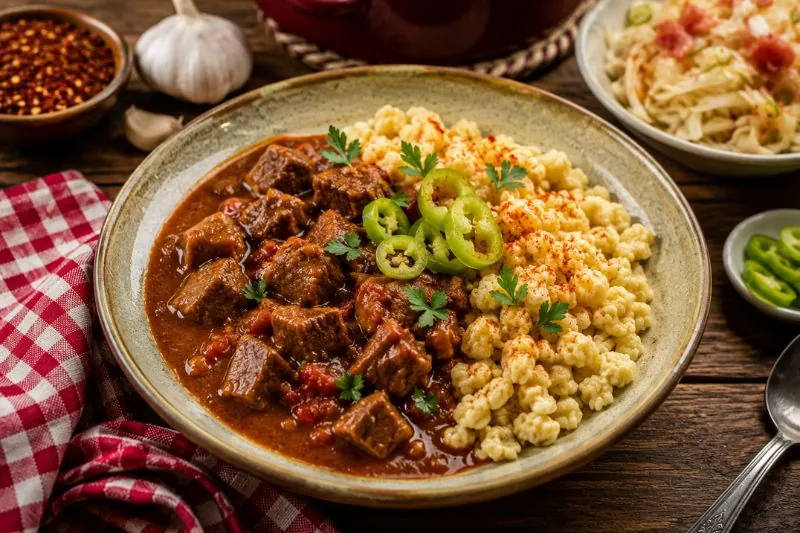
Thicker and richer than goulash, pörkölt is a slow-braised meat stew — usually beef, pork, or venison — cooked down with onions and paprika until it’s almost a sauce. It’s traditionally served over nokedli, a soft Hungarian egg noodle similar to spätzle.3. Chicken Paprikash (Paprikás Csirke)
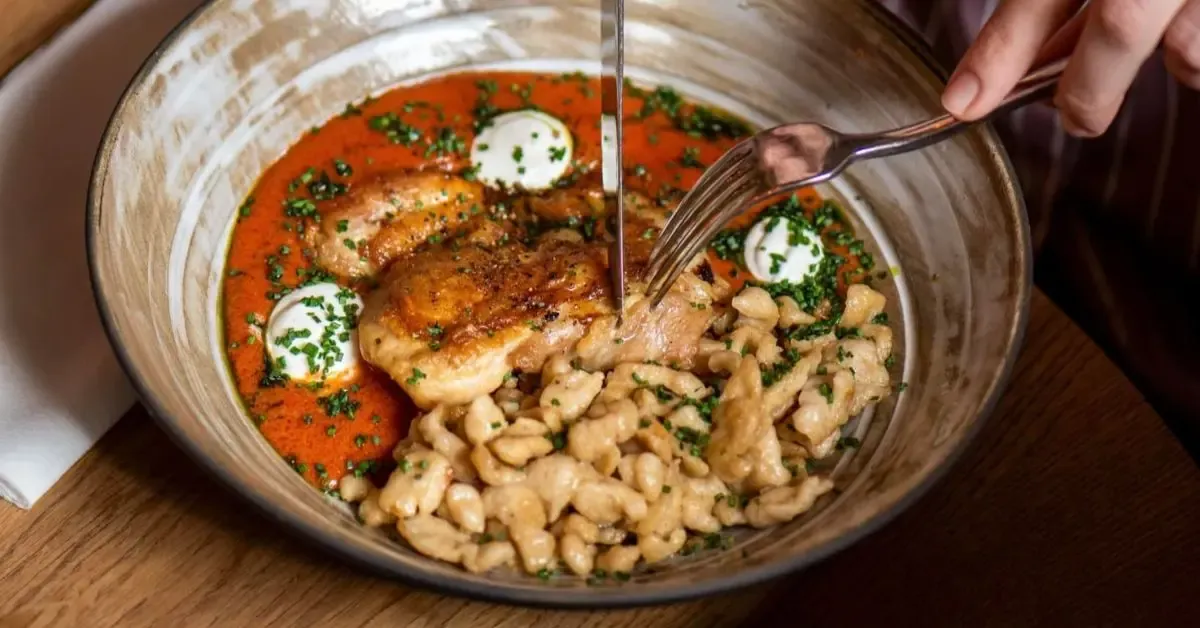
One of the most popular traditional Hungarian dishes, chicken paprikash features tender chicken in a creamy paprika-and-sour-cream sauce. It’s comfort food at its finest and a great introduction to Hungarian cooking for first-timers.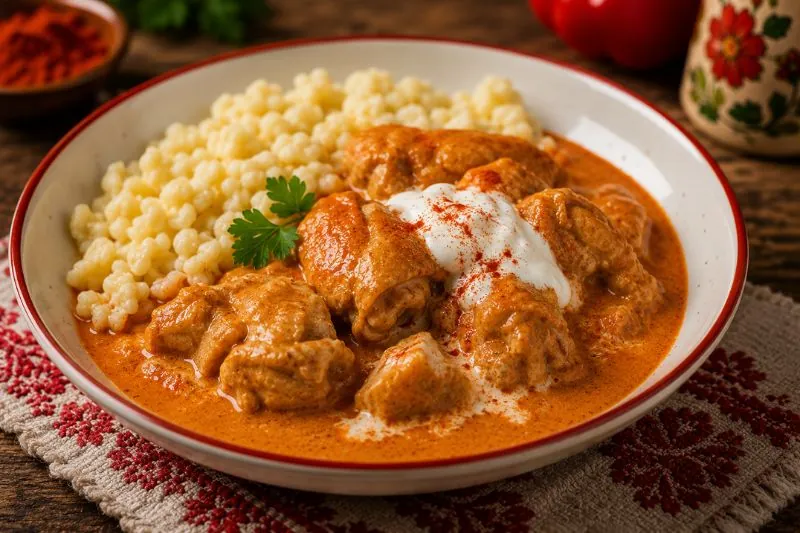
4. Lángos
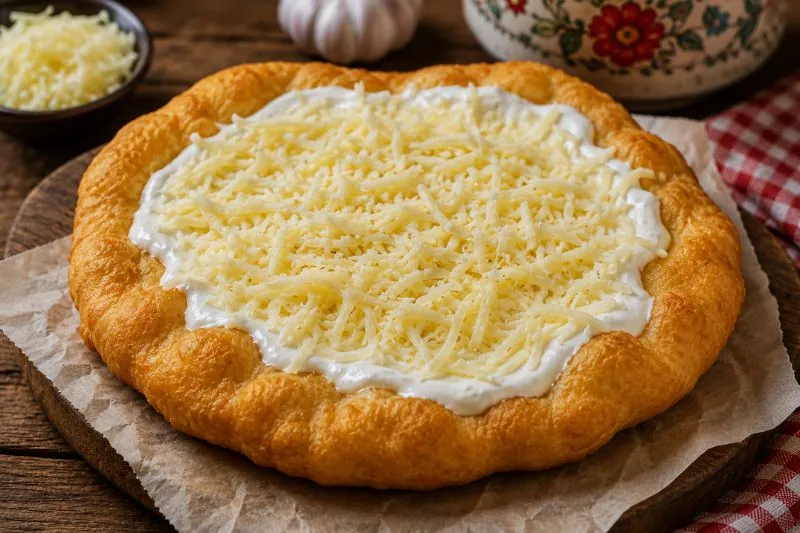
Hungary’s answer to street food royalty. Lángos is deep-fried dough, traditionally topped with sour cream and grated cheese (and often garlic). You’ll find stalls selling it at markets, festivals, and near major squares — it’s one of the best examples of Hungarian street food and an essential stop for any Budapest food tour.5. Halászlé (Fisherman’s Soup)
A fiery, paprika-red river fish soup, halászlé is traditionally made with carp along the Danube and Tisza rivers. It’s spicier than goulash and a favorite among locals, especially in winter.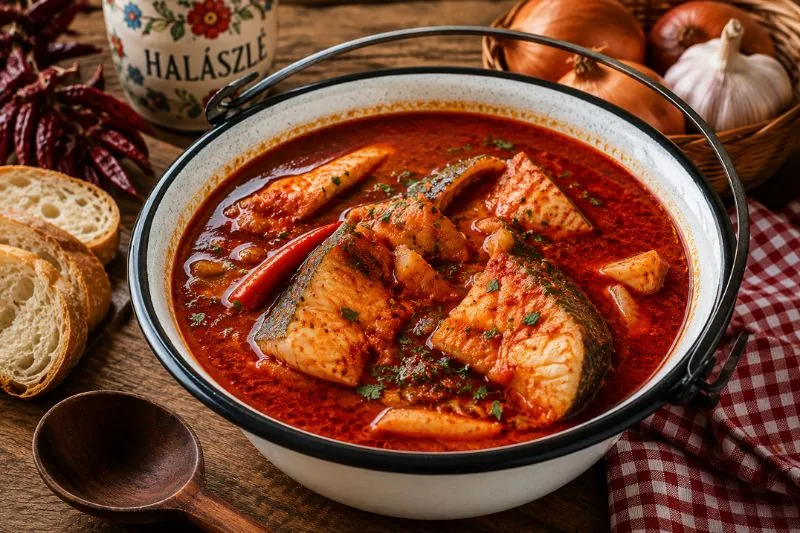
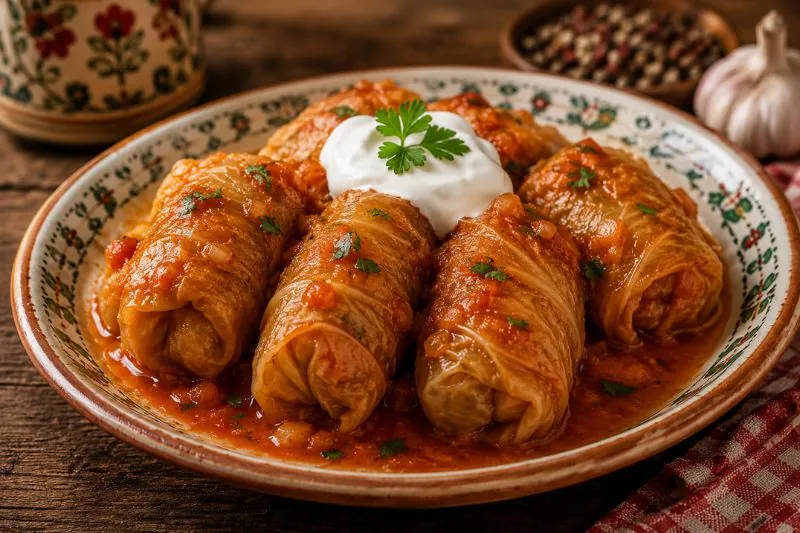
6. Töltött Káposzta (Stuffed Cabbage)
Cabbage leaves rolled around rice and minced meat, slow-cooked in a paprika-tomato broth. It’s a staple at Hungarian family tables, especially around Christmas and New Year’s.7. Dobos Torte
Hungary’s most famous dessert — a multi-layer sponge cake with chocolate buttercream, topped with a signature caramel glaze. Invented in Budapest in 1884, it’s still served in cafés across the city almost exactly as originally created.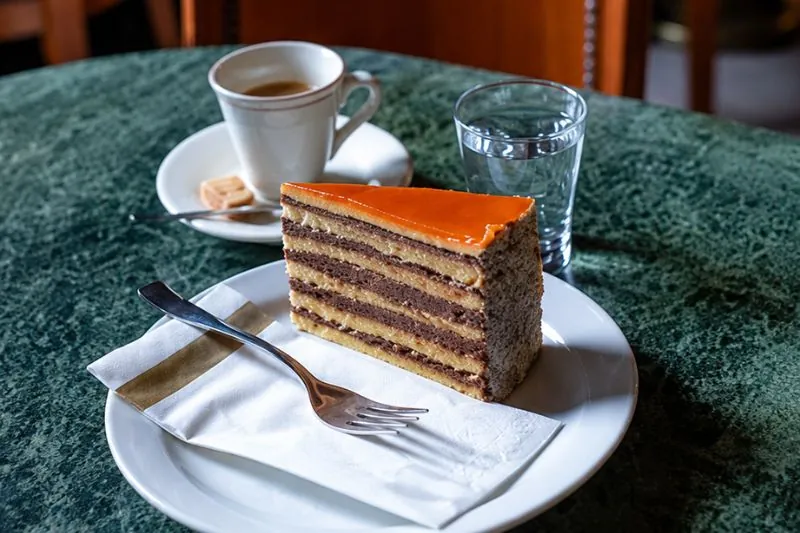

8. Kürtőskalács (Chimney Cake)
You’ll smell this one before you see it. Chimney cake is a sweet, cylindrical pastry grilled over charcoal and rolled in sugar, cinnamon, walnuts, or cocoa. It’s a must for anyone exploring Christmas markets or festivals in Budapest.9. Túrós Csusza
A simple but beloved dish of pasta mixed with Hungarian cottage cheese (túró), sour cream, and crispy bacon bits. It’s the kind of home-cooking dish that rarely makes it onto tourist menus — worth seeking out for an authentic experience.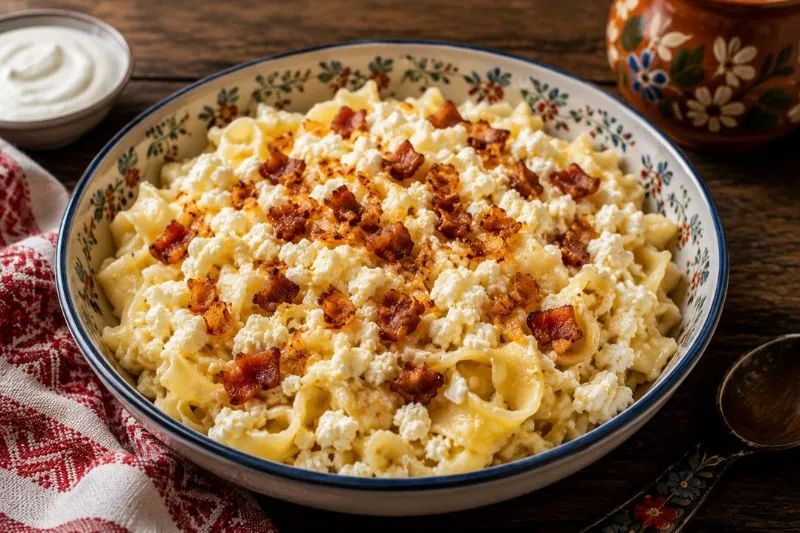
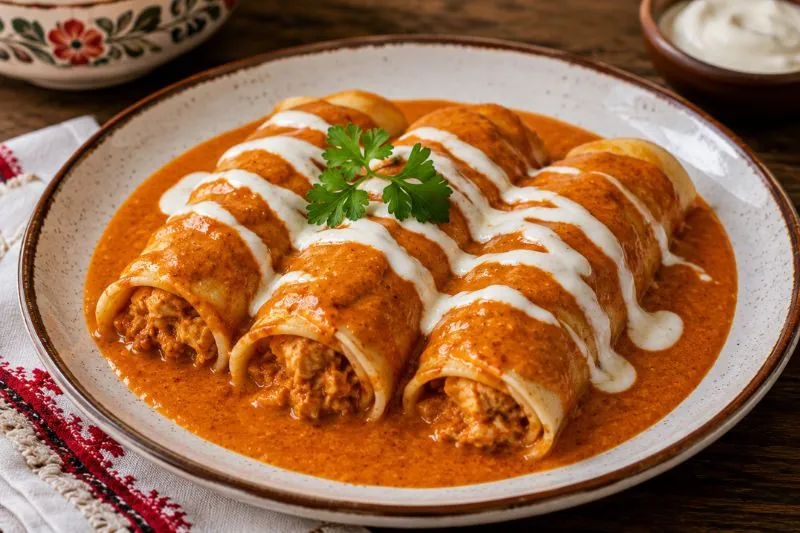
10. Hortobágyi Palacsinta
A savory crepe filled with a rich meat ragout, typically named after the Hortobágy region in eastern Hungary. It’s an elegant, restaurant-style starter that showcases how versatile Hungarian pancakes can be.11. Somlói Galuska
A decadent trifle-style dessert layering sponge cake, chocolate sauce, whipped cream, and rum-soaked fruit. Rich, boozy, and worth the calories.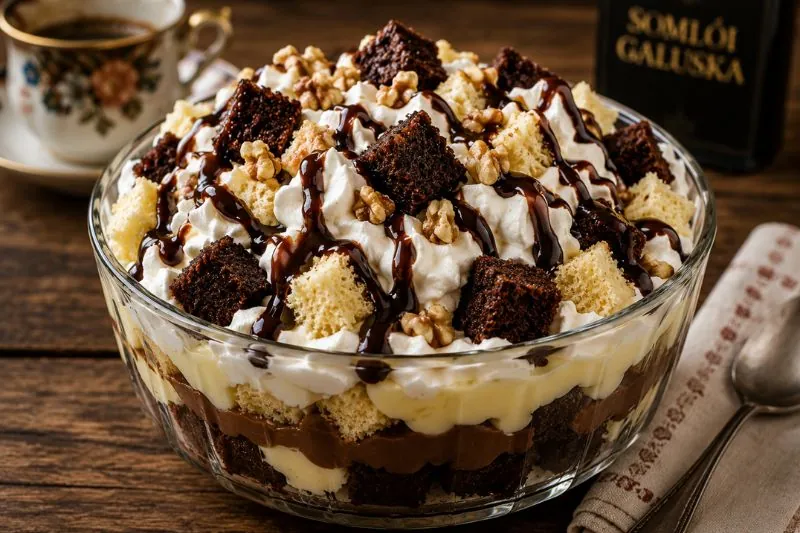
12. Retes (Strudel)
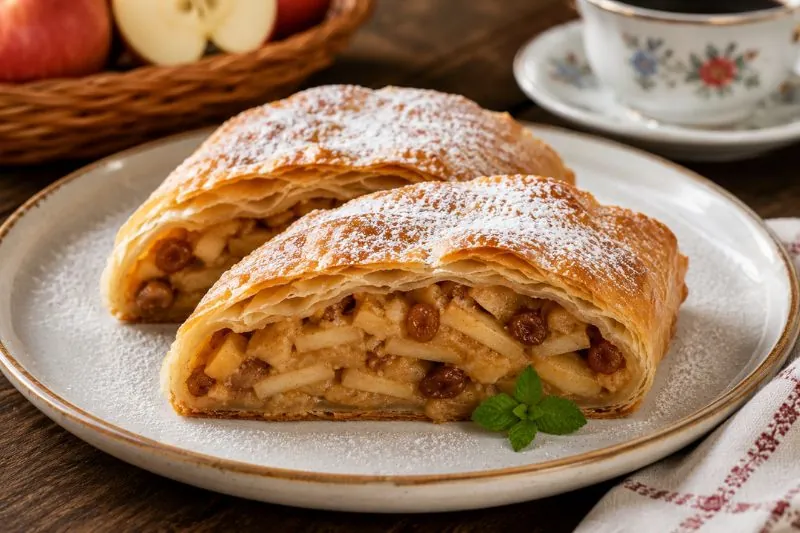
Hungarian strudel comes in both sweet (apple, cherry, poppy seed) and savory (cabbage) versions, wrapped in impossibly thin pastry. A holdover from the Austro-Hungarian era that’s now firmly part of Hungarian identity.13. Sausages: Kolbász and Hurka
Hungarian sausages, especially the paprika-cured kolbász, are a source of national pride. You’ll find them at markets, in stews, and grilled at festivals — often alongside mustard and fresh bread.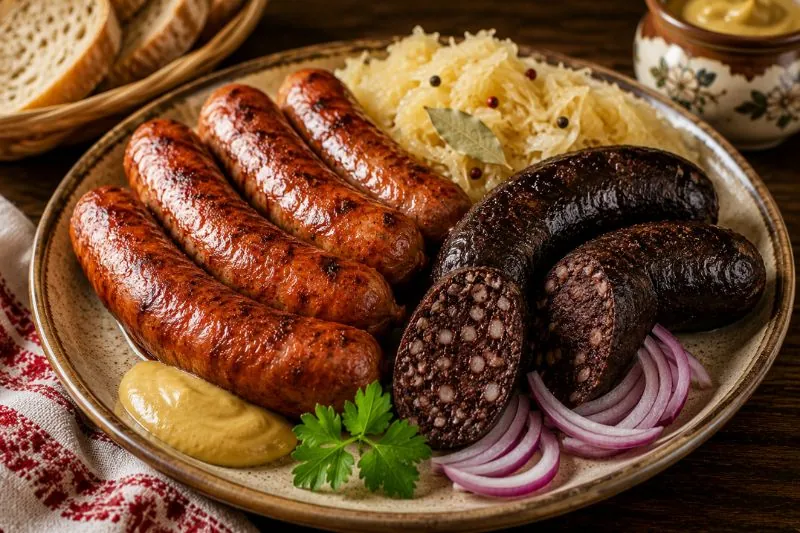
14. Pogácsa
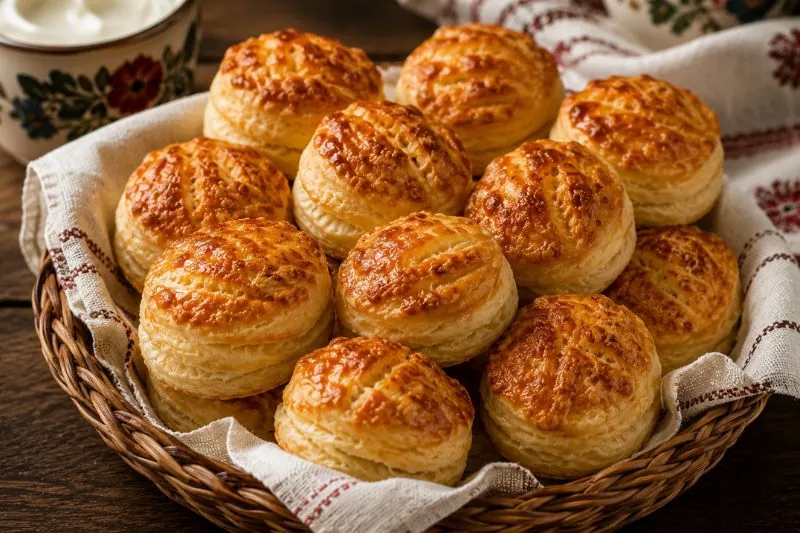
Small, savory scones often flavored with cheese or bacon, pogácsa are the perfect snack to grab from a bakery while exploring the city on foot.15. Lecsó
A Hungarian vegetable stew of stewed peppers, tomatoes, and onions, often cooked with sausage or eggs and finished with plenty of paprika. It’s a summer staple made when peppers and tomatoes are at their peak, and one of the few classic Hungarian dishes that’s naturally vegetarian-friendly on its own.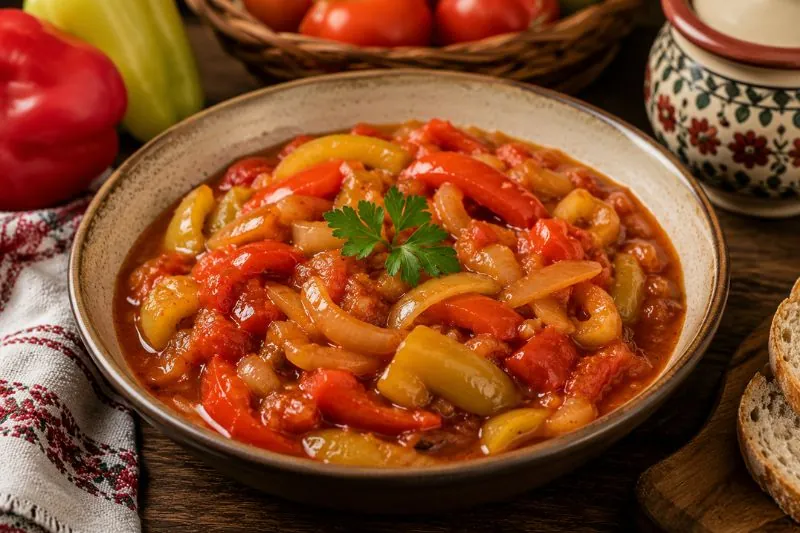
Quick Questions About Hungarian Food
Is Hungarian food spicy?Not typically hot-spicy — Hungarian paprika is more about deep, smoky flavor than heat, though some dishes (like halászlé) do have a kick.
What is the national dish of Hungary?
Goulash (gulyás) is widely considered Hungary’s national dish, though pörkölt is equally beloved by locals.Is Hungarian food vegetarian-friendly?
Traditional Hungarian cuisine is meat-heavy, but dishes like túrós csusza, lecsó (a paprika-vegetable stew), and pogácsa offer solid vegetarian options.